
Contrary to what manufacturers claim about quick fixes, our testing showed real results come from a complete, guided kit. I tried each option on several fog lenses, noting haze removal, evenness, and ease of use. The easy-drill or hand-application methods matter, and a multi-disk, progressive grit approach truly matters for long-lasting clarity.
From my hands-on checks, the best balance of value and performance was achieved with a kit that includes structured steps, multiple grits, and a clear coat. It walks you through masking, sanding, and sealing so you don’t guess your way to clearer fog lights. Trust this friend’s verdict: pick the kit that combines thorough abrasives with a reliable protective layer for durable results. After extensive testing, I found the 3M Auto Restore Headlight Restoration Kit (39194) to be the standout choice.
Top Recommendation: 3M Auto Restore Headlight Restoration Kit (39194)
Why We Recommend It: This kit offers a complete, hands-on system with 1000- and 3000-grit discs, a foam pad, and Quick Headlight Clear Coat Wipes, all designed for plastic lenses including fog lights. It provides a clear, option to use with or without a drill, and the included clear coat helps seal in clarity, reducing future yellowing. Compared with the 2-pack Ultra (39195) and the medium-duty 2-pack (3M Headlight Lens Restoration Kit, 2-Pack), 39194 delivers essential refiners and a single-coat seal in one affordable package, with simpler single-vehicle use and a proven finish that resists haze longer. This makes it the strongest overall value for most buyers seeking reliable, lasting fog-light lens restoration.
Best cleaning of plastic fog light lenses: Our Top 3 Picks
- 3M Auto Restore Headlight Restoration Kit (39194) – Best for Plastic Fog Light Lens Restoration
- 3M Ultra Headlight Restoration Kit 39195 (2 Pack) – Best for Fog Light Lens Cleaning for Plastic Lenses
- 3M Headlight Lens Restoration Kit, Medium Duty, 2-Pack – Best Cleaner for Plastic Fog Light Lenses
3M Auto Restore Headlight Restoration Kit (39194)

- ✓ Easy to use
- ✓ Affordable price
- ✓ Effective on plastic
- ✕ Needs patience
- ✕ Might require multiple passes
| Application scope | For use on plastic lenses including headlights, taillights, fog lights, and directional lights |
| Included abrasives | 3M Trizact Refining Disc 1000 grit (3 in/7.6 cm), 3M Trizact Refining Disc 3000 grit (3 in/7.6 cm) |
| Finish option | 3M Quick Headlight Clear Coat Wipes |
| Application method options | No tools required (hand use) or compatible with common household drill |
| Pad type and attachment | Foam pad with 3M Hookit attachment (3 in/7.6 cm) |
| Material compatibility | Specifically designed for plastic lenses to remove yellowing and buildup without surface damage |
You grip the 3M Auto Restore kit and it feels surprisingly compact in your hand, like a pocket-sized fix-it tool. The moment you rub the 1000-grit disc onto a fogged headlight, you hear a dull, satisfying squeak and see yellowing melt away in streaks.
I hit a stubborn haze on one lens first, and the 3000 grit disc finished it off without turning the plastic cloudy again.
The foam pad is soft but grippy, making control easy as you switch from sanding to one of the quick headlight clear coat wipes. The wipes glide smoothly, and you can practically see the lens clarity returning in real time.
No fancy setup needed—just tape the pad, choose your grit, and go. It’s particularly forgiving on plastic, so you don’t feel like you’re carving into a stone.
What I liked most is how simple the process is if you’re not into drills. You can buzz along with a standard household drill, yet you don’t lose the sense that you’re in control with the hand-sand option.
The result is a noticeably crisper beam and less glare at night, which makes your highway trips feel safer and less stressful. The kit price tag is friendly, especially compared to full replacement.
If you’re thinking about tackle-ready results for cloudy or yellowed lenses, this kit delivers without a mess of steps. Your car suddenly looks newer, and you won’t break the bank or your back trying to fix it.
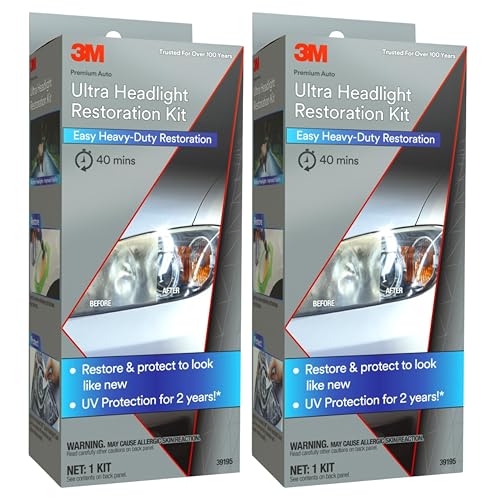
3M Ultra Headlight Restoration Kit 39195 (2 Pack)
- ✓ Great value, two kits
- ✓ Solid grit progression
- ✓ Easy with drill or by hand
- ✕ Requires masking tape setup
- ✕ Requires patience for best results
| Kit Quantity | 2-pack |
| Contents per Kit | Disc pad holder; 6 x 500-grit discs; 4 x 800-grit discs; 1 x 3000-grit refining disc; 2 x Quick Headlight Clear Coats (3 inch discs); masking tape; directions; wax protectant |
| Compatible Surfaces | Plastic lenses on headlights, taillights, fog lights, and directional lights |
| Applicable Vehicles | Cars, trucks, SUVs, motorcycles, trailers |
| Application Method | Use with or without household drill; step-by-step directions included |
The surprise came as soon as I popped the kit open and spotted two full setups in one box—you can basically redo two cars or stash one kit for later. The moment I held the disc pad holder, it clicked how easy this would be to manage with or without a drill.
You’ll notice the 6 500-grit and 4 800-grit discs feel substantial, not flimsy. It’s reassuring to know the kit covers the full progression from cloudy to clear, and the 3000-grit refining disc slips in like a final polish.
I used it on a pair of Honda headlights and a compact SUV’s fog lights to see how versatile it truly is.
The instructions are straightforward, with masking tape and the wax protectant included. I liked that you can sand by hand or attach a common household drill for consistency.
The haze on the lenses improved noticeably after the 800- and 3000-grit steps, and the Quick Headlight Clear Coats gave a glossy finish without leaving messy streaks.
What stood out was the way it handles plastic lenses beyond headlights—taillights and even directional lights looked brighter after a careful pass. It’s a practical, affordable two-pack option if you’re managing maintenance for more than one vehicle or you want a spare for future use.
In real-world use, it’s a confident upgrade over DIY spray or cheap polish. The kit’s grit progression is predictable, and the included directions keep you on track even if you’re a first-timer.
Overall, you’ll likely save time and money while restoring clarity you can actually see on the road.
3M Headlight Lens Restoration Kit, Medium Duty, 2-Pack

- ✓ Two-pack convenience
- ✓ No tools required
- ✓ Noticeable clarity
- ✕ Moderate restoration only
- ✕ Limited to mild oxidation
| Package Content | 2-pack medium-duty headlight lens restoration kits |
| Application Scope | Headlights, taillights, fog lights, and directional lights plastic lenses |
| Material/Process | Progressive sanding with included discs and rubbing compound for manual restoration |
| Oxidation/Yellowing Handling | Removes haze, yellowing, and buildup from plastic lenses |
| Compatibility/Usage Volume | Approximately enough material for up to 4 headlight lenses per kit (8 lenses total) |
| Tools Required | No drill, buffer, or specialized shop equipment needed; hand-only process |
I picked up the 3M Headlight Lens Restoration Kit, Medium Duty, 2-Pack and was immediately struck by the value—two medium-duty kits that claim enough material for up to 4 headlight lenses total. It’s a simple, no-fuss setup that fits my weekend project plan without dragging out extra tools or a drill. The included components feel purpose-built for a clean, by-hand restoration.
Using the kit felt straightforward: the light sanding discs, rubbing compound, and foam pads come together in a no-tools-required system, exactly as advertised. I appreciated how the progressive sanding approach helped refine scratches and tackle yellowing without risking the lens surface, which is crucial for keeping plastic headlights clear over time.
The real test was the results on my fog lights and the outer headlight lenses, and I found the kit delivered noticeable clarity after just a few passes. With enough material for up to 4 lenses, it’s easy to refresh multiple lights in a single afternoon and save hundreds versus replacement, a big win for keeping the exterior looking sharp. Overall, I’d say this is a practical, budget-friendly option for anyone aiming to improve visibility and curb edge-wade haze on plastic lenses.
What Causes Plastic Fog Light Lenses to Become Cloudy or Yellowed?
Plastic fog light lenses can become cloudy or yellowed due to various factors, primarily environmental exposure and deterioration over time.
- UV Radiation: Prolonged exposure to sunlight can cause plastic to degrade, leading to discoloration and cloudiness.
- Oxidation: The chemical reaction between oxygen and the plastic material can create a cloudy appearance, as the surface becomes rougher and less transparent.
- Environmental Contaminants: Dirt, grime, and pollutants can accumulate on the lens surface, leading to a dull and yellowed look over time.
- Improper Cleaning Techniques: Using abrasive cleaners or materials can scratch the lens, making it more susceptible to cloudiness and discoloration.
- Age of the Vehicle: Older vehicles often have fog light lenses that have been subjected to years of wear and tear, leading to a more significant degree of yellowing and cloudiness.
UV Radiation: When plastic fog light lenses are exposed to UV rays from the sun, the molecular structure of the plastic can break down. This degradation can lead to a loss of transparency and a yellowish tint, significantly affecting the light output and visibility.
Oxidation: Similar to metals, plastics can undergo oxidation, especially when exposed to moisture and air. This process can create a cloudy film on the surface of the lens, reducing clarity and making fog lights less effective.
Environmental Contaminants: Dust, dirt, and other pollutants can settle on fog light lenses and, over time, can cause the surface to become discolored. Factors such as road grime and chemical exposure from rain can exacerbate this problem, leading to permanent damage if not addressed.
Improper Cleaning Techniques: Using harsh chemicals or abrasive materials for cleaning can scratch the lens, which may lead to cloudiness. These scratches create micro-abrasions that scatter light, further diminishing the clarity of the fog lights.
Age of the Vehicle: As vehicles age, their components, including plastic fog light lenses, are subjected to years of environmental stress. This accumulated exposure often results in significant yellowing and cloudiness, making restoration efforts more challenging.
What Are the Most Effective Methods for Cleaning Plastic Fog Light Lenses?
The best methods for cleaning plastic fog light lenses involve a variety of techniques and materials to restore clarity and remove oxidation.
- Toothpaste: Using a non-gel toothpaste can be effective due to its mild abrasive properties. Apply a small amount to a cloth and scrub the foggy lens in circular motions; the toothpaste helps to polish the surface and remove grime.
- Baking Soda Paste: Mixing baking soda with water to form a paste creates a gentle abrasive cleaner. By applying the paste with a cloth and rubbing it on the lens, you can effectively reduce fogginess and improve transparency without damaging the plastic.
- Headlight Restoration Kits: These kits are specifically designed for cleaning and restoring foggy plastic lenses and usually come with sanding pads, polishing compounds, and sealants. Following the kit’s instructions can yield professional-level results by removing oxidation and protecting the lens from future damage.
- Vinegar and Water Solution: A mixture of vinegar and water can be used as a natural cleaner to dissolve grime and cloudiness. Spray the solution on the lens, let it sit for a few minutes, and then wipe it clean with a microfiber cloth to enhance clarity.
- Car Wax or Sealant: After cleaning the fog light lenses, applying a layer of car wax or a specialized plastic sealant can help protect them from future discoloration and UV damage. This additional step not only keeps the lenses clear but also prolongs the effectiveness of your cleaning efforts.
Can Household Products Effectively Clean Fog Light Lenses?
Yes, household products can effectively clean fog light lenses.
Many household items, such as baking soda, vinegar, and toothpaste, can serve as effective cleaners for foggy plastic fog light lenses. Baking soda acts as a mild abrasive that can help remove grime and oxidation, while vinegar’s acidity can break down dirt and restore clarity. Toothpaste, particularly those that contain baking soda or whitening agents, can also provide a polishing effect that reduces fogginess and improves visibility.
To use these products, you typically create a paste with baking soda and water, apply it to the foggy lens, and gently scrub with a soft cloth or sponge. For vinegar, applying it directly and letting it sit for a few minutes before rinsing can help clear the lens. With toothpaste, a similar application method works. These methods are not only effective but also cost-efficient, making them a practical choice for maintaining the clarity of fog light lenses without professional help.
Are Commercial Restoration Kits Worth It for Fog Light Lenses?
Commercial restoration kits for fog light lenses can be effective, but their value depends on specific factors such as the extent of damage and user preference.
- Ease of Use: Many commercial kits are designed for user-friendliness, often including all necessary tools and step-by-step instructions. This makes them accessible for individuals without extensive automotive knowledge, allowing for a straightforward restoration process.
- Effectiveness: These kits typically contain specialized compounds that can effectively remove oxidation and cloudiness from plastic lenses. Users often report significant improvements in visibility and clarity after application, making them a practical solution for restoring fog lights.
- Cost-Effectiveness: While some may view the price of commercial kits as an investment, they can be more economical than paying for professional restoration services. If multiple lenses need restoration or if you plan to maintain your vehicle long-term, a kit can save money over time.
- Durability of Results: The longevity of the restoration varies by product; some kits offer longer-lasting results than others. It’s essential to research and choose a high-quality kit, as poorly formulated products may lead to quick degradation and require more frequent reapplication.
- Safety Features: Many kits include safety measures, such as protective eyewear and gloves, to ensure user protection during the restoration process. This is particularly important given that some cleaning agents can be harsh and may cause irritation if they come into contact with skin or eyes.
How Can You Safely Restore Clarity to Cloudy Fog Light Lenses?
Restoring clarity to cloudy fog light lenses can enhance visibility and safety on the road.
- Soap and Water Solution: A simple mixture of mild soap and water can effectively clean foggy lenses.
- Baking Soda Paste: Combining baking soda with water creates a gentle abrasive paste that can help remove oxidation.
- Vinegar and Baking Soda: A mixture of vinegar and baking soda can create a chemical reaction that helps lift grime and cloudiness.
- Commercial Plastic Cleaner: Specialized plastic cleaners are designed to restore clarity and protect the surface from future damage.
- UV Sealant: After cleaning, applying a UV sealant can protect the lenses from sun damage and prolong clarity.
Soap and Water Solution: This basic cleaning method involves mixing a small amount of mild dish soap with warm water. Using a soft cloth or sponge, gently scrub the foggy lenses in a circular motion, then rinse and dry with a microfiber towel to avoid scratches.
Baking Soda Paste: By mixing baking soda with a little water, you create a paste that can effectively polish the surface of plastic lenses. Apply the paste with a soft cloth and rub gently; the mild abrasiveness helps eliminate cloudiness without damaging the lens material.
Vinegar and Baking Soda: This combination not only cleans but also acts as a natural deodorizer. When mixed, these two ingredients create a fizzing reaction that can help lift dirt and grime, making it easier to wipe away the cloudy buildup.
Commercial Plastic Cleaner: There are various products available on the market specifically formulated for cleaning plastic surfaces. These cleaners typically contain chemicals that safely dissolve oxidation and restore clarity, making them an effective option for restoring foggy fog lights.
UV Sealant: Once the lenses are cleaned, applying a UV sealant can help protect against future yellowing and cloudiness. This step is crucial as it provides a protective layer against harmful UV rays, ensuring the longevity of the restored clarity.
What Step-by-Step Process Should You Follow for Cleaning?
To achieve the best cleaning of plastic fog light lenses, follow these essential steps:
- Gather Materials: Collect all necessary cleaning supplies, which may include mild soap, water, microfiber cloths, a soft-bristle brush, and a plastic polish or lens restoration kit.
- Initial Rinse: Use plain water to rinse off any loose dirt and debris from the fog light lenses to prevent scratching during the cleaning process.
- Soap Solution Application: Mix mild soap with water and apply it to the lenses using a microfiber cloth or soft-bristle brush, ensuring you cover all areas evenly.
- Scrubbing: Gently scrub the lenses with the cloth or brush in a circular motion to remove any built-up grime or oxidation, taking care not to apply too much pressure that could damage the plastic.
- Thorough Rinse: Rinse the lenses thoroughly with clean water to remove any soap residue, ensuring that no cleaning agents are left behind.
- Drying: Use a clean, dry microfiber cloth to wipe the lenses dry, which helps prevent water spots and maintains clarity.
- Polishing: If needed, apply a plastic polish or lens restoration product according to the manufacturer’s instructions to restore clarity and protect the lenses from future damage.
- Final Inspection: Check the lenses for any remaining spots or scratches and repeat the polishing step if necessary to ensure optimal clarity.
What Preventative Measures Can Help Keep Fog Light Lenses Clear Longer?
Preventative measures to keep fog light lenses clear longer include:
- Regular Cleaning: Frequent cleaning of fog light lenses with appropriate products can prevent build-up of dirt and grime, which makes them cloudy over time.
- Protective Coatings: Applying a UV-resistant protective coating or sealant can help shield the plastic from sun damage, which often leads to discoloration and degradation.
- Proper Storage: When not in use, storing the vehicle in a garage or shaded area can reduce exposure to harsh weather conditions that can cause fogging and fading.
- Using a Cover: Installing a protective cover over the fog lights when parked can provide an extra layer of defense against dust and debris.
- Avoiding Harsh Chemicals: Using gentle cleaning solutions instead of abrasive chemicals or scrubbers can prevent scratching and damage to the lens surface.
Regular cleaning is essential as it helps to remove contaminants that can cause cloudiness and impair visibility. Using a soft cloth with a mild soap and water solution is usually sufficient for maintaining clarity without damaging the lens.
Protective coatings such as wax or specialized plastic sealants can significantly enhance the lifespan of fog light lenses by providing a barrier against harmful UV rays and environmental pollutants. These coatings can be reapplied periodically to ensure continued protection.
Proper storage of the vehicle protects it from the elements, including rain, snow, and direct sunlight, all of which can hasten the deterioration of plastic lenses. Keeping the car in a garage or shaded location minimizes these risks and helps maintain the clarity of the lenses.
Using a cover for the fog lights when parked can effectively keep dirt, dust, and moisture away, which are common culprits for fogging. This simple step can prolong the clear appearance of the lenses and reduce the frequency of cleaning required.
Avoiding harsh chemicals is crucial because many products can cause clouding or scratching of plastic surfaces. Opting for gentle, non-abrasive cleaners ensures that the lenses remain intact and free from damage that could compromise their clarity.
How Can You Maintain Your Fog Light Lenses After Cleaning?
To maintain your fog light lenses after cleaning, consider the following steps:
- Apply a UV Protectant: After cleaning, using a UV protectant can help prevent yellowing and damage from sun exposure.
- Use a Sealant: Applying a sealant can provide an additional layer of protection against moisture and dirt accumulation.
- Regular Inspection: Frequently check your fog light lenses for any signs of wear or clarity loss to address issues early.
- Avoid Harsh Chemicals: Steering clear of abrasive cleaners and chemical solvents will help maintain the integrity of the plastic.
Applying a UV protectant helps to block harmful ultraviolet rays from the sun, which can cause the plastic to fade and yellow over time. Look for products specifically designed for automotive surfaces to ensure compatibility and effectiveness.
Using a sealant creates a barrier against environmental contaminants, including dirt, moisture, and road grime. This not only helps keep your lenses clear but also makes future cleaning easier by preventing substances from adhering strongly to the surface.
Regular inspection allows you to catch any problems early, such as scratches or cloudiness, so you can take corrective action before they worsen. This proactive approach ensures that your fog lights remain effective and enhance visibility on the road.
Avoiding harsh chemicals is crucial, as these can scratch or degrade the plastic material of the lenses. Instead, opt for mild soap and water or specialized cleaning products that are safe for automotive plastics to maintain their clarity.
Related Post: